- Selective forwardingSFU
- The server forwards streams instead of mixing them, so latency stays low and class conversation feels natural.
- Adaptive qualitySimulcast · Adaptive Stream
- Each viewer gets the quality their tile size and connection call for, and a tile nobody can see isn't sent at all.
- Lighter sendingDynacast
- A quality nobody is watching isn't produced, so laptops run cooler and phone batteries last longer.
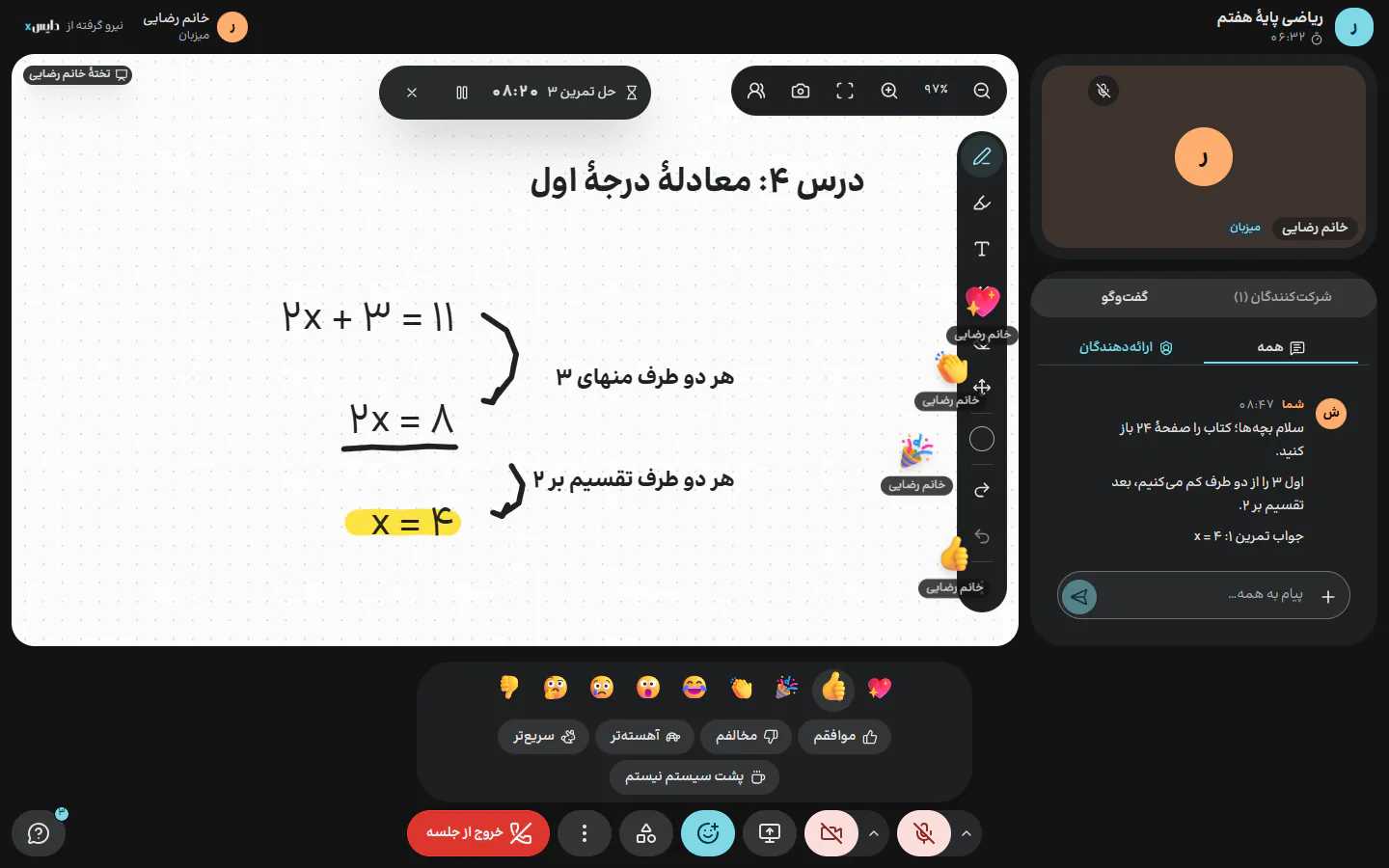
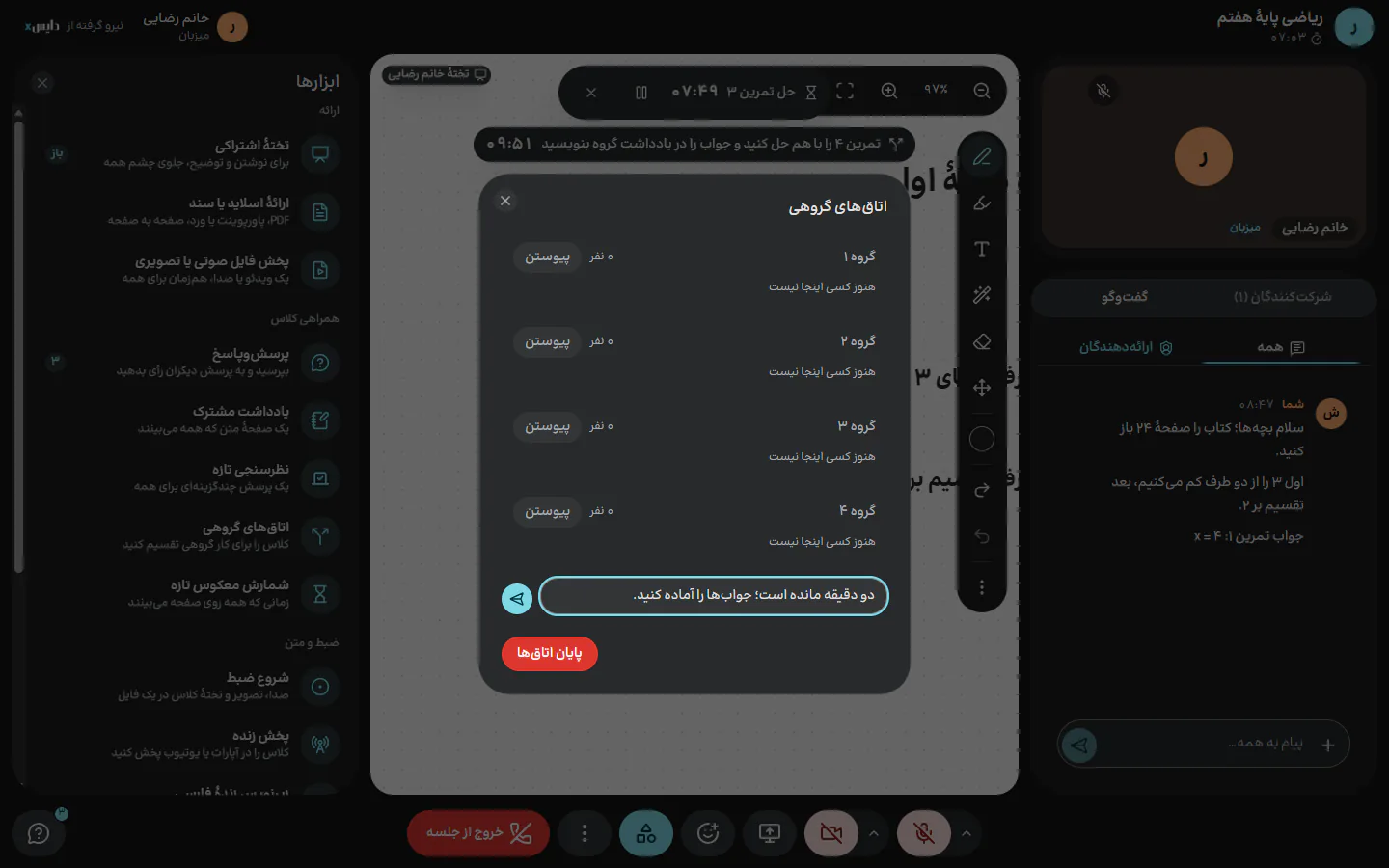
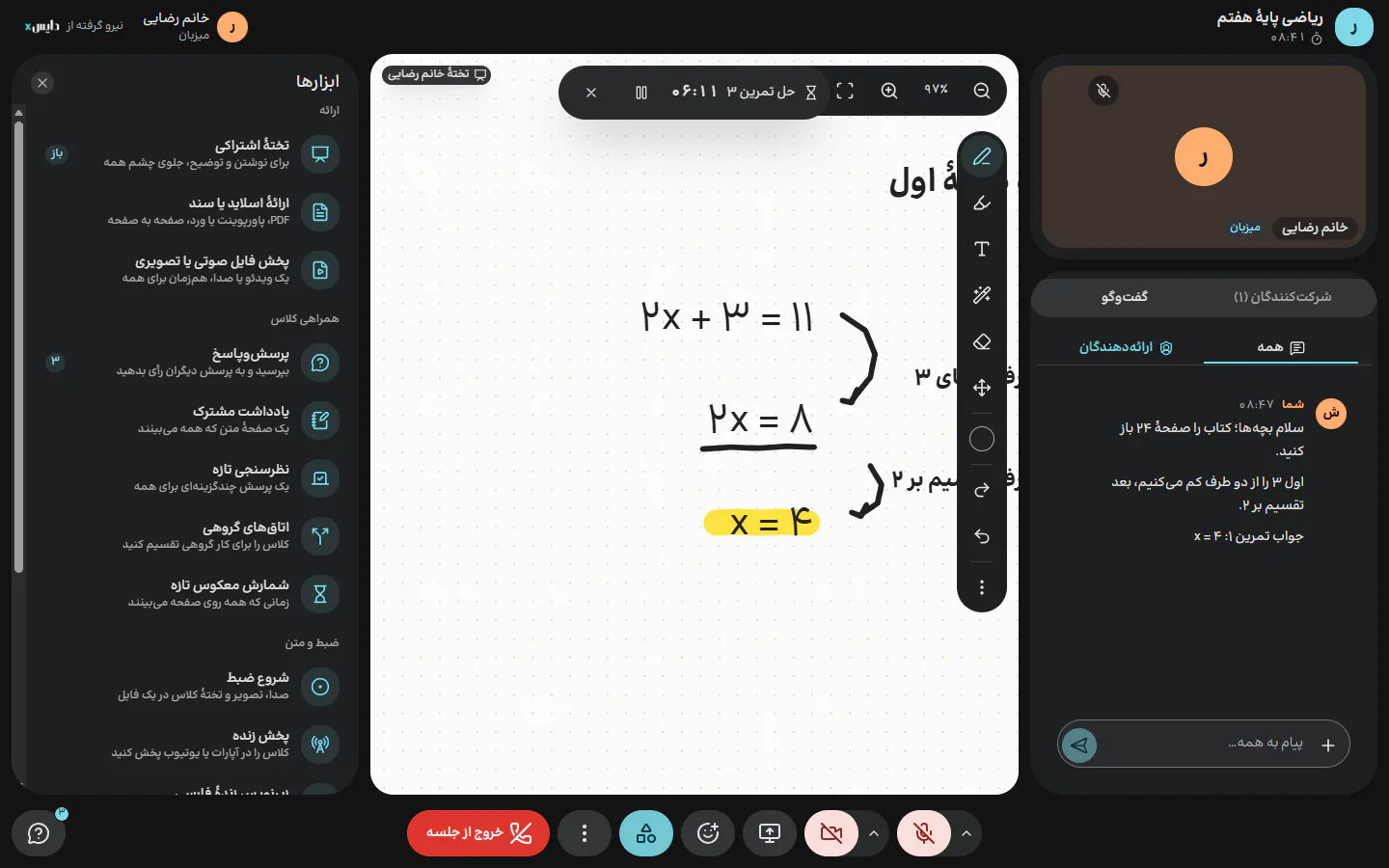
- Data channels for class toolsData Channels
- Chat, board, polls and every other tool travel as fast as audio and video, over the same meeting connection.
- Server-side recording and streamingRoom Egress
- Recordings and live streams are produced on the server, not on the teacher's laptop, so the live class doesn't suffer.
- Server eventsWebhooks
- Attendance is built from the server's own events, not from what a browser claims; even a tab closed suddenly is recorded.
- Through the firewallTURN/TLS · 443
- If the direct path is blocked, the connection goes through port 443; after a brief drop, the meeting reconnects on its own.
- Server time, not device timeServer clock
- The session timer, hand queue and countdown don't go wrong on a device whose clock is an hour out.